

M33 – The Triangulum Galaxy
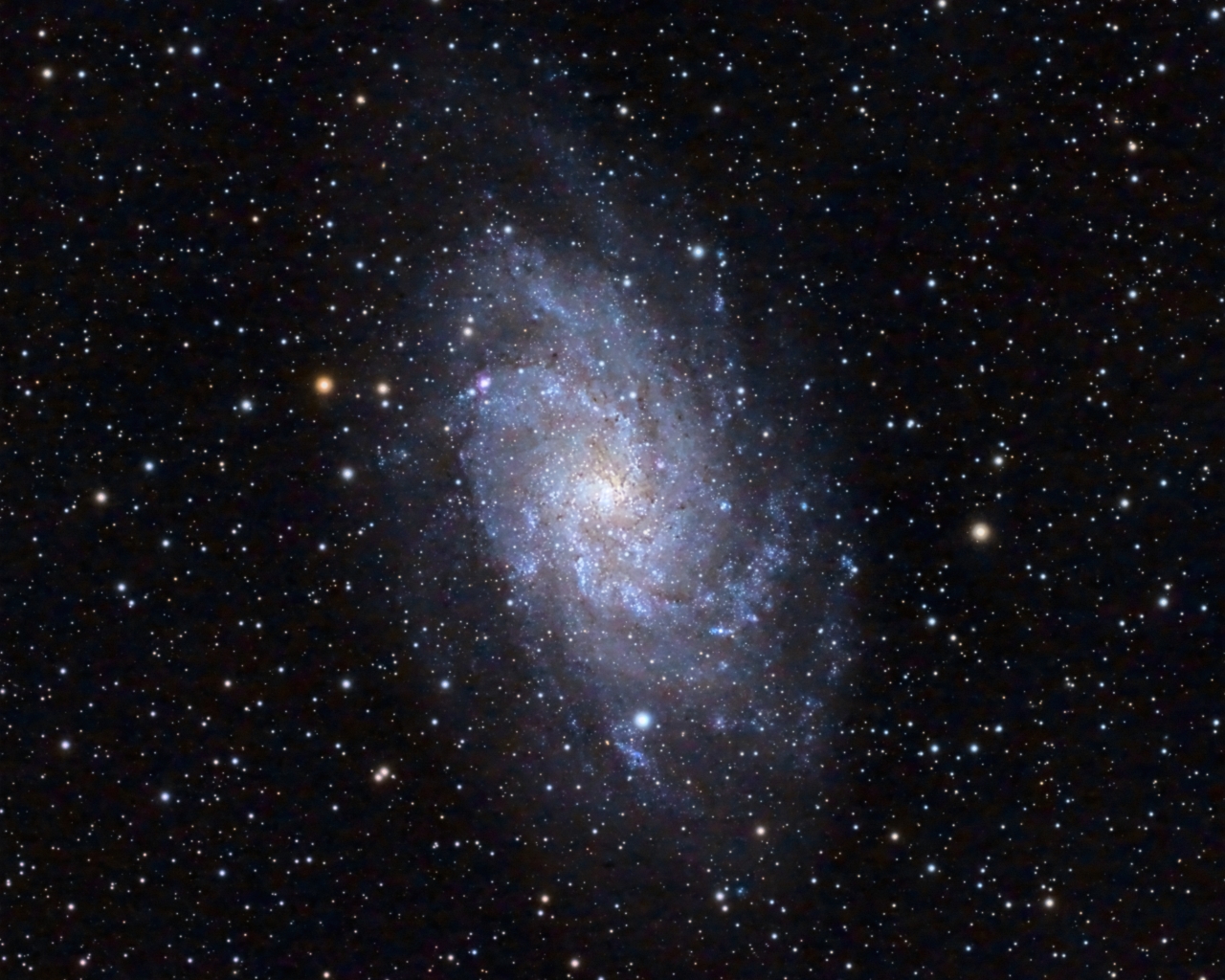
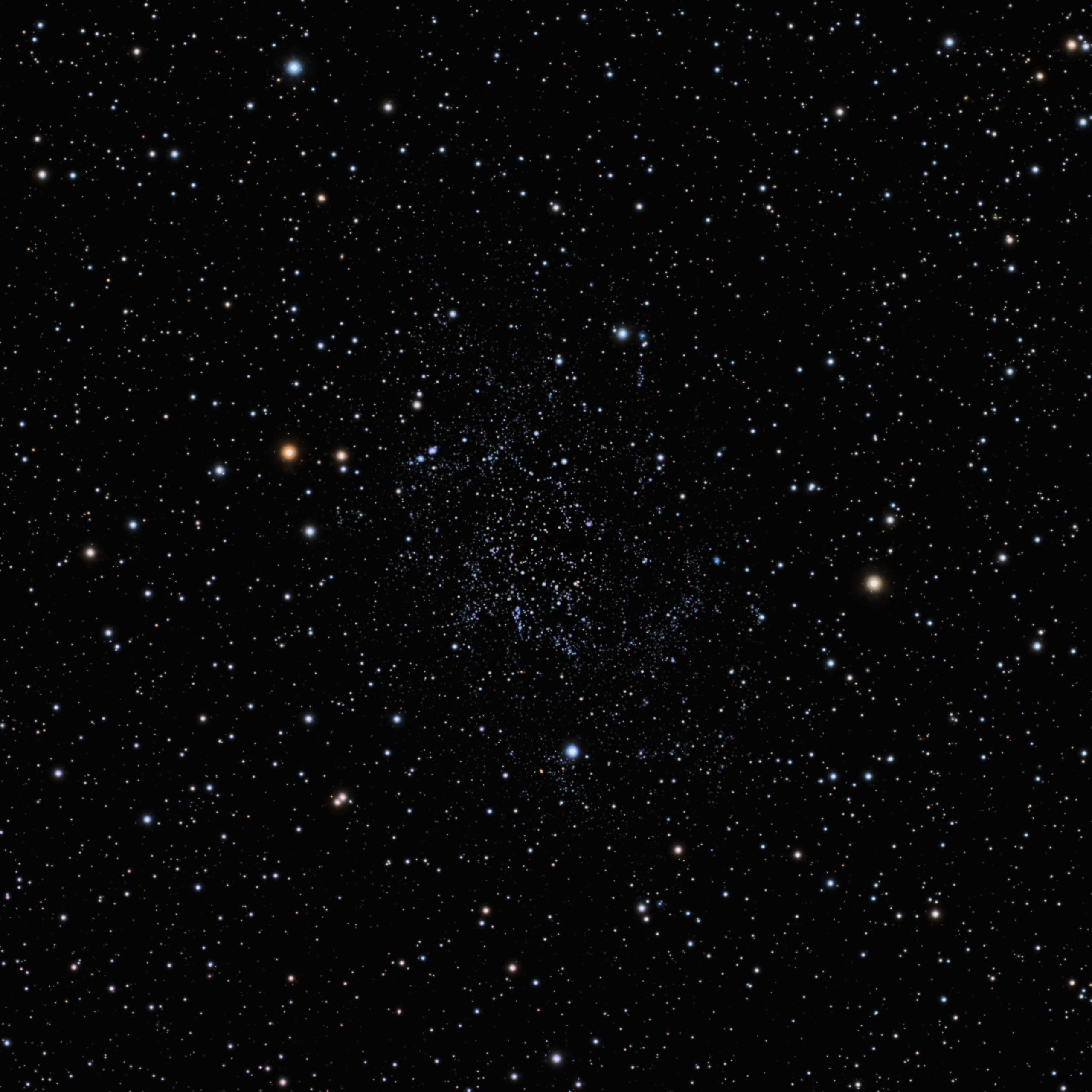
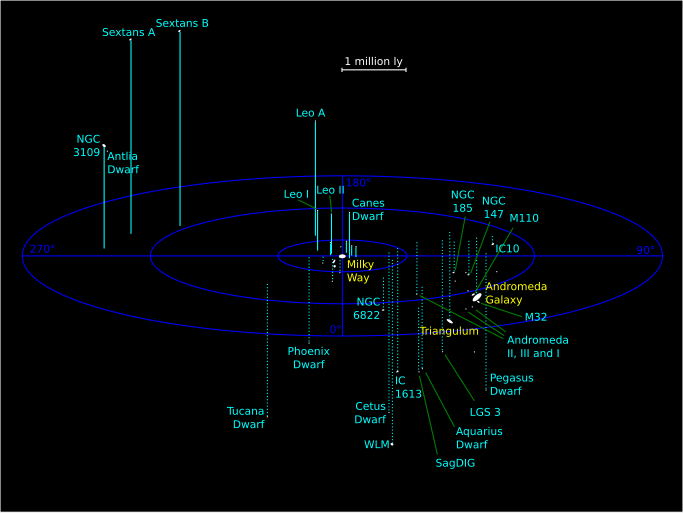
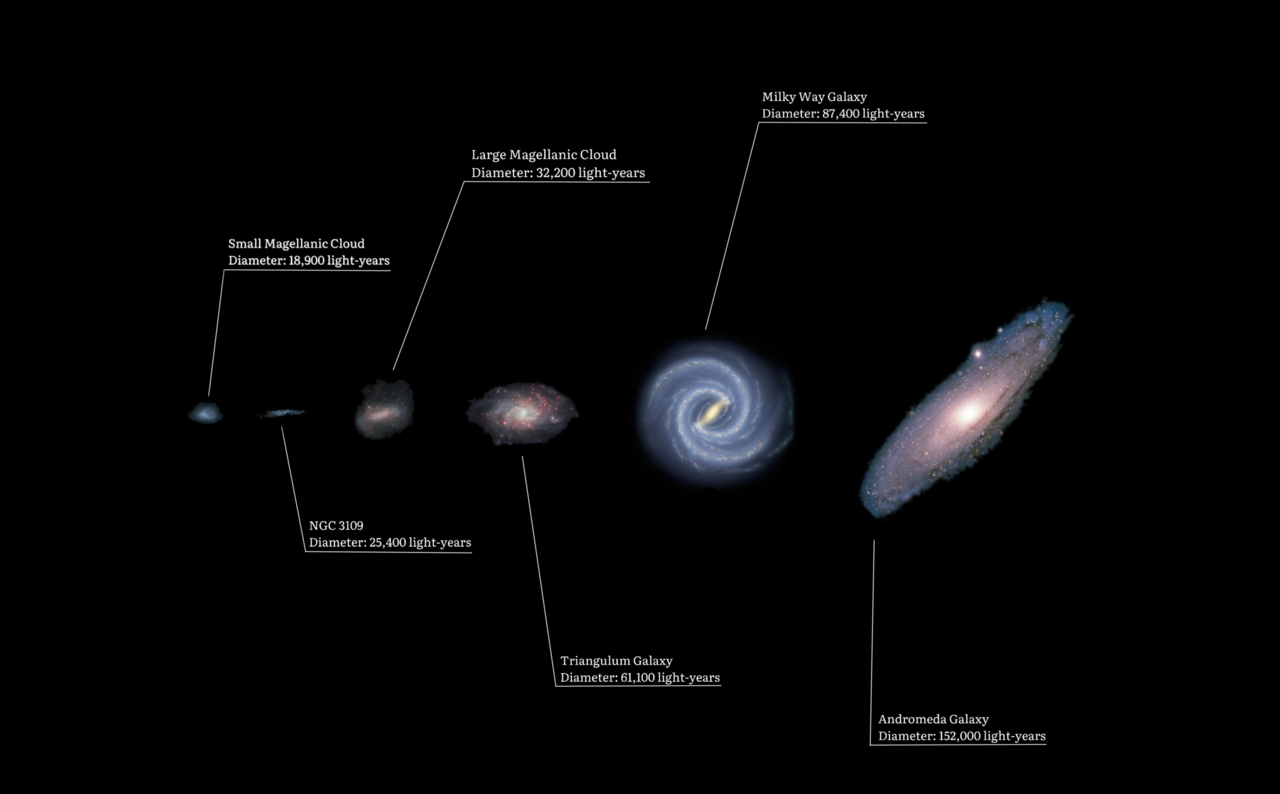
M33 (the Triangulum Galaxy) is a nearly face-on spiral galaxy in the constellation Triangulum and one of the major members of the Local Group, alongside the Milky Way and M31. Modern distance measurements place it at about 2.7–3.0 million light-years (≈ 840–970 kpc), close enough that individual bright stars, star clusters, and nebulae can be studied in detail. In morphological classification it is typically listed as SA(s)cd—a late-type spiral with loosely wound arms and a relatively small central bulge—and its commonly quoted optical diameter (D25) is about 18.7 kpc (~61,000 light-years). The second image is the “starmask” image produced when processing. This image shows what looks like a cluster of stars where the galaxy is in the full image. These are the globular clusters surrounding the central disk of the galaxy.
M33 is particularly valued as a nearby “laboratory” for star formation in spiral disks. It hosts an exceptionally rich population of H II regions (ionized hydrogen clouds) and massive star-forming complexes; the standout is NGC 604, one of the largest star-forming regions in the Local Group, spanning roughly ~460 pc (~1,500 light-years) and powered by a large population of hot, massive O-type and Wolf–Rayet stars. Because M33 is resolved so well, astronomers can map how star formation correlates with gas density, and they can measure radial abundance (metallicity) gradients using H II regions and young supergiants—key constraints on how disks build up chemically over time.
Historically, M33 was probably first recorded by Giovanni Battista Hodierna before 1654, and it was independently observed and cataloged by Charles Messier on the night of August 25–26, 1764 (becoming Messier 33; also NGC 598). Beyond its photogenic spiral structure, M33 has played an outsized role in understanding galaxy dynamics: its rotation curve has been used to constrain the distribution of dark matter in a relatively low-mass spiral, and it is also often cited as an important case of a pure-disk galaxy that does not show strong evidence for a central supermassive black hole compared to larger spirals.
Sources & References
- NASA Science (Hubble Messier Catalog) — M33 overview; star formation emphasis; NGC 604 context
https://science.nasa.gov/mission/hubble/science/explore-the-night-sky/hubble-messier-catalog/messier-33/ - SEDS Messier Pages — Messier 33 (NGC 598) overview and observing/context notes
https://www.messier.seds.org/m/m033.html - ESO (VST release) — distance context and Messier’s 1764 observation mention
https://www.eso.org/public/news/eso1424/ - Wikipedia — Triangulum Galaxy: distance, type SA(s)cd, D25 size, discovery history (Hodierna; Messier 25–26 Aug 1764)
https://en.wikipedia.org/wiki/Triangulum_Galaxy - Wikipedia — NGC 604: size scale, stellar content summary, and key references
https://en.wikipedia.org/wiki/NGC_604 - Magrini et al. (2007), Astronomy & Astrophysics — M33 disk build-up and metallicity gradient framework
https://www.aanda.org/articles/aa/pdf/2007/30/aa7215-07.pdf
Project Details
-
Belleville, MI - October 2025
-
ZWO FF65, FL = 416mm, f6.4, Pentax K3ii, 17h3m Total Integration Time